Unladylike Dictionary: 10 words they used against women

Every Indian girl has a personal dictionary she never asked for. “Too loud.” “Too much.” “Ladki ho, thoda dhang se.” The English language has its own version, and some of its words are centuries old.
This is our Unladylike Dictionary: ten words used against women, where they came from, and why we’re taking them back. Some started as compliments. One started as a fart joke. Read on.
1. Virago
Then: from Latin vir, man. A virago was a heroic woman with the courage people expected from men.
Now: used for a loud, bossy woman.
Ours: a woman with courage. Back to the original, please.
2. Spinster
Then: a woman who spun wool for a living. Because many unmarried women did this work, English legal records from the 1600s used “spinster” for any unmarried woman. Wedding banns read “spinster of this parish”.
Now: an insult for a woman who “missed her chance”.
Ours: a woman with her own income. Very 2026.
3. Shrew
Then: around 1275, a shrew was a rascal or evil-doer of either sex. By Chaucer’s time, in the late 1300s, it had narrowed to a scolding wife.
Now: Shakespeare’s The Taming of the Shrew made sure nobody forgot it.
Ours: a woman who said no. Nobody tames her.
4. Termagant
Then: an imaginary god that medieval European plays wrongly claimed Muslims worshipped. On stage, Termagant was a ranting villain in long robes. Because the costume looked like a gown, audiences started using the name for quarrelsome women. By 1688 a play had a character called “Mrs Termagant”.
Now: a nagging woman.
Ours: proof the insult was a costume mix-up.
5. Hussy
Then: a shortened form of housewife.
Now: a woman considered shameless.
Ours: the same word for the woman running the house and the woman “running around”. Make it make sense.
6. Hysterical
Then: from Greek hystera, womb. For centuries doctors believed women’s emotional distress came from the uterus.
Now: “Calm down, you’re being hysterical,” said every man who lost an argument.
Ours: a reminder to ask who’s diagnosing whom.
7. Harpy
Then: in Greek myth, harpies were winged monsters with women’s faces who snatched food and people.
Now: an aggressive, unpleasant woman.
Ours: she has wings. We’ll take it.
8. Feisty
Then: from feist, an American word for a small, yappy dog, first recorded in 1805. That came from an older phrase meaning “stinking cur”, built on a Middle English word for fart. Feisty itself dates from 1896.
Now: a “compliment” for a woman who speaks up, said in the tone you’d use for a pomeranian.
Ours: we prefer “determined”.
9. Bossy
Then: a word for anyone who gives orders.
Now: often aimed at girls and women who lead. In 2014, Lean In and the Girl Scouts of the USA ran a “Ban Bossy” campaign because girls were stepping back from leadership to avoid the label.
Ours: she’s the boss. Drop the y.
10. Unladylike
Then: anything a “proper” woman shouldn’t do: laughing loudly, sitting cross-legged, arguing with uncle at dinner, eating the last samosa.
Now: the name of this newspaper.
Ours: our favourite compliment.
Why do these words stick to women?
Because most of them changed meaning once they were aimed at women. Spinster, shrew, termagant and virago all started out describing a job, a person of either sex, a stage villain or a hero. Over centuries each narrowed into a word for a woman who didn’t behave. Language records who gets policed.
When reclaiming a word doesn’t work
Not every word is ready to be reclaimed, and not by everyone. If a word still hurts the person it’s aimed at, joking about it can feel like another hit. Use these with friends who are in on it, and let each woman decide which words she wants back.
FAQ
Is “bossy” used more for girls than boys?
The Ban Bossy campaign by Lean In and the Girl Scouts of the USA argued that it is, and that girls avoid leadership roles to escape the label.
Are there male equivalents of these words?
A few, like “bachelor” for spinster, but they rarely carry the same sting. Bachelor sounds like freedom. Spinster was made to sound like failure.
What’s the oldest word on this list?
Shrew, used for a wicked person around 1275, and termagant, whose earliest form appears in the 11th-century Song of Roland.
Want a new reclaimed word every morning? The Word of the Day on our front page changes daily.
Read next
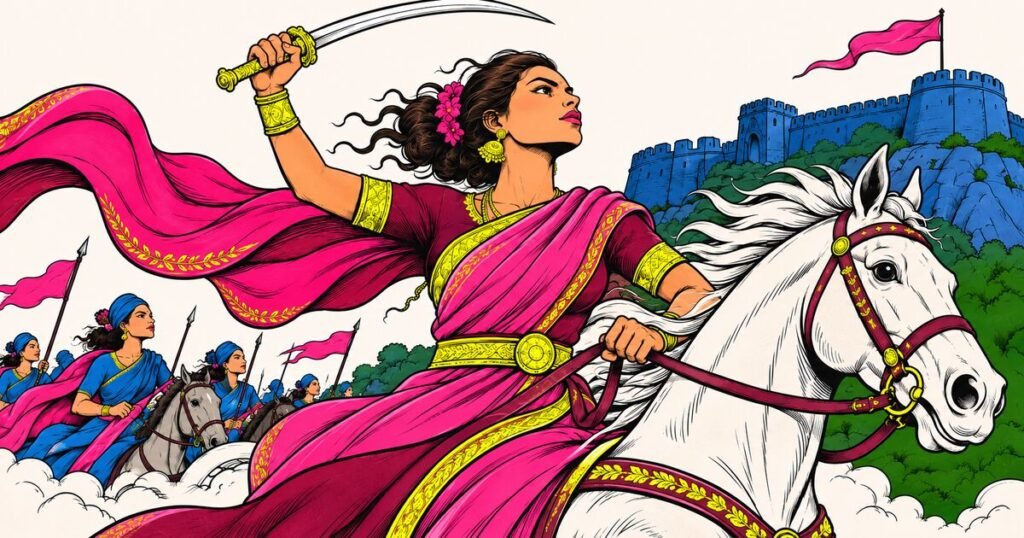 Herstory
Rani Lakshmibai: what the Rani of Jhansi teaches a 2026 girl
Widowed, refused her kingdom, then led her own troops in 1857. Her story, and what we take from it.
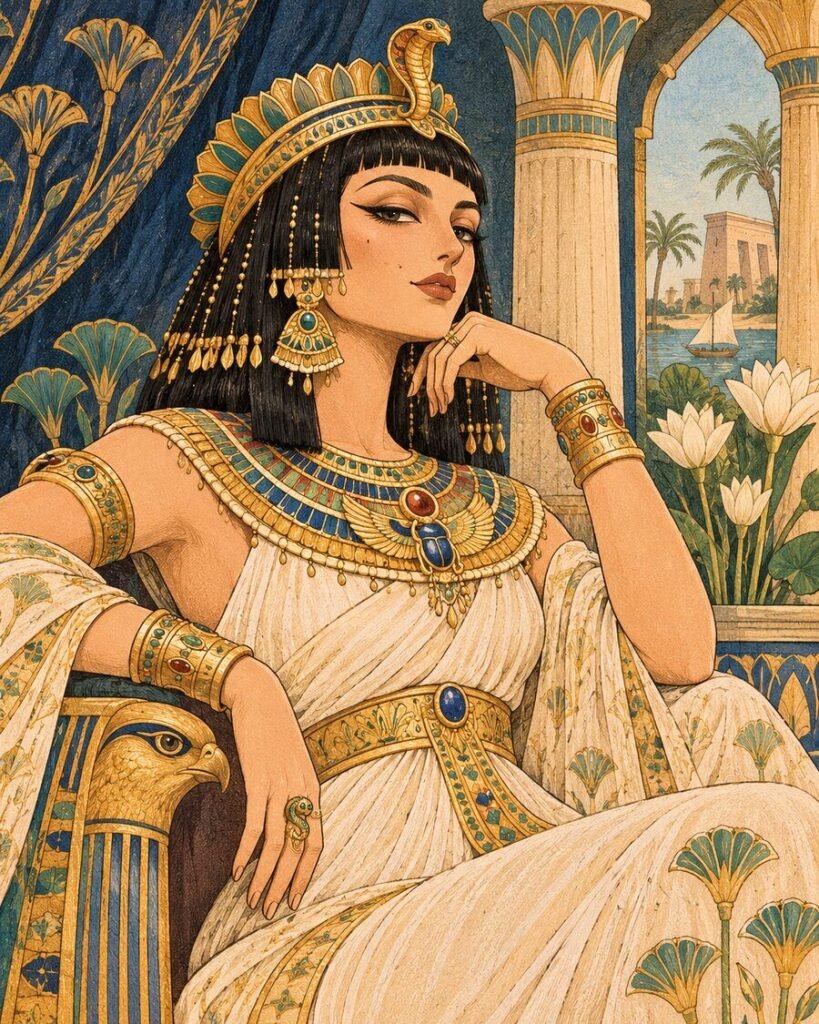 Herstory
Cleopatra did her own PR
She learned the language her family never bothered with, staged her entrances and put her face on the money. A marketer reads the queen of Egypt.
 Gossip Corner
Wedding season survival guide for the single cousin
Shaadi kab, weight comments and the rishta ambush. Comebacks, outfit hacks and an exit plan for every function.