Cleopatra did her own PR
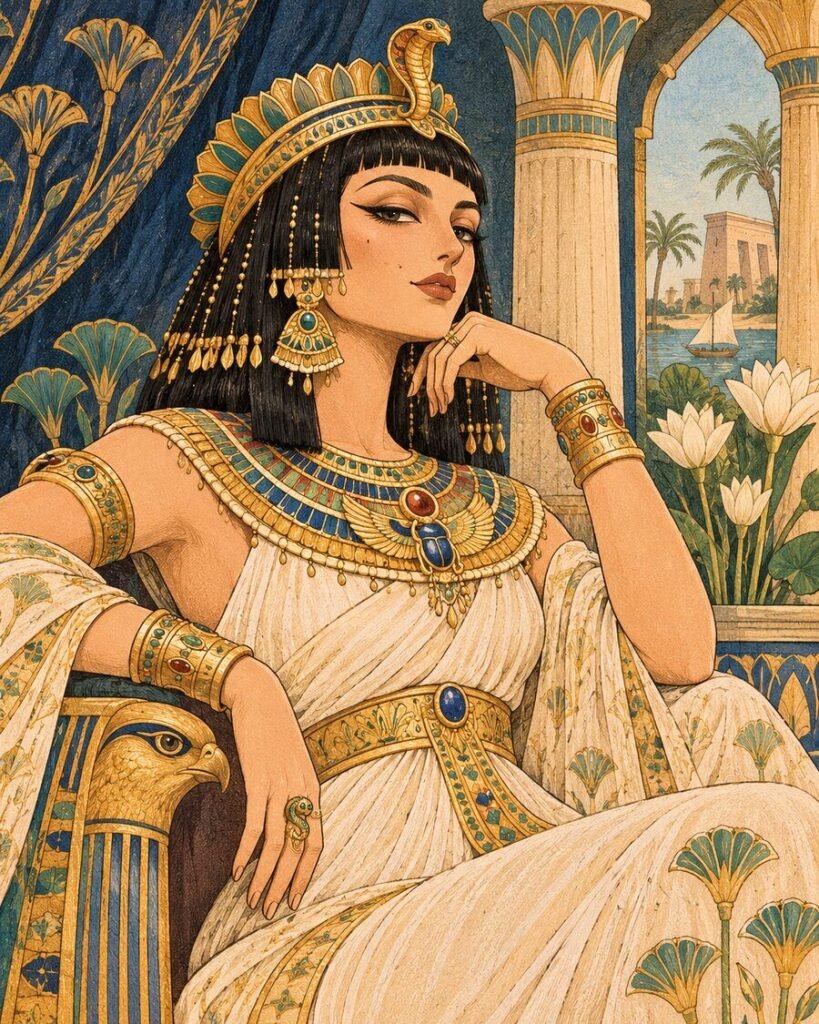
Your family has run the same business for 300 years. Nobody in it has bothered to learn the local language. Then you arrive, learn it, and start talking to customers directly.
That is roughly what Cleopatra personal branding looked like in 51 BC. Cleopatra VII ruled Egypt for about 21 years, and two thousand years later we still know her name, her look and her entrances. That is a PR result most brands would sell their founders for.
This post reads the queen of Egypt the way a marketer would: what she did, why it worked, and what a woman building a career or a side hustle in India can take from her.
Was Cleopatra Egyptian?
No. Cleopatra belonged to the Ptolemies, a Macedonian Greek family that ruled Egypt after Alexander the Great died. The family spoke Greek and mostly married within itself. Cleopatra was born into that bubble and chose to step out of it, which is where her story as a brand begins.
According to the Greek writer Plutarch, most of the kings before her had not even tried to learn Egyptian. Some had stopped speaking Macedonian too.
She spoke her audience’s language
Plutarch writes that Cleopatra needed an interpreter for very few foreign peoples. She spoke directly to Ethiopians, Hebrews, Arabians, Syrians, Medes and Parthians, and she learned Egyptian.
Think about what that does. A ruler who answers you in your own language feels like she is on your side.
The 2026 version: speak the way your audience speaks. If your clients say “website banana hai”, don’t reply with “digital presence architecture”. Learn their words before you sell them yours.
She planned every entrance
Cleopatra never just showed up. Two of her entrances are still retold:
- Meeting Julius Caesar. Her brother’s forces controlled Alexandria, so she had herself carried into the palace hidden in a bedding sack. Plutarch says this is what first won Caesar over.
- Meeting Mark Antony. She sailed up the river Cydnus to Tarsus in a barge with a gilded stern and purple sails, rowed with silver oars to the sound of flutes and harps. She lay under a canopy of gold cloth, dressed as Venus.
Antony had summoned her to answer charges. She turned the summons into a show, and the crowd left Antony sitting alone in the marketplace to go and watch her.
The 2026 version: your first impression is a design brief. The first slide of your pitch deck, your LinkedIn banner, the way you walk into an appraisal meeting. Plan it.
She kept one look, everywhere
Cleopatra presented herself as the goddess Isis, wearing Isis’s robes at public events. Her portrait went on her coins, so her face travelled through every market in the kingdom.
Same symbols, same story, repeated until people didn’t need a caption. That is what brand guidelines are for.
The 2026 version: pick your colours, your tone and your signature topics, then repeat them for longer than feels comfortable. You’ll get bored of your brand long before your audience remembers it.
Someone else wrote her ending
Here is the part most Cleopatra stories skip. Almost everything we know about her comes from Roman writers, and Rome had just beaten her.
Octavian, who became Augustus, needed his war against Antony to look like a defence against a dangerous foreign queen. So Cleopatra was written as a seductress who ruined a good Roman man. Plutarch wrote his account roughly 150 years after she died.
Her story survived. Her version of it did not.
The 2026 version: if you don’t tell your story, the other side tells it for you. Write the LinkedIn post about your promotion. Put your name on the project. Correct the record in the meeting.
Where the Cleopatra playbook stops working
Not every move transfers. Cleopatra ruled with an army behind her, and some of her strategy depended on alliances with powerful men. Copying the drama without the substance just looks like drama.
The parts worth keeping are the ones that cost nothing: learning your audience’s language, planning first impressions, staying consistent and telling your own story first.
What a 2026 girl takes from this
- Learn the words your audience uses before you use yours.
- Treat every first impression like a design brief.
- Pick a look and a tone, then repeat them until people recognise you without your name.
- Post your version of events before someone else does.
FAQ
How long did Cleopatra rule Egypt?
About 21 years, from 51 BC until her death in 30 BC. For parts of that time she ruled alongside her brothers and, later, her son Caesarion.
Where do the famous Cleopatra stories come from?
Mostly from Plutarch’s Life of Antony and other Greek and Roman writers. Few sources from Cleopatra’s own side survive, so historians read the Roman accounts with caution.
Was Cleopatra the last pharaoh of Egypt?
She was the last active ruler of the Ptolemaic dynasty. After her death in 30 BC, Egypt became a Roman province.
Want more women who wrote their own rules? Read the story of Rani Lakshmibai next, or see everyone on the wall in Herstory Hall.
Read next
 Herstory
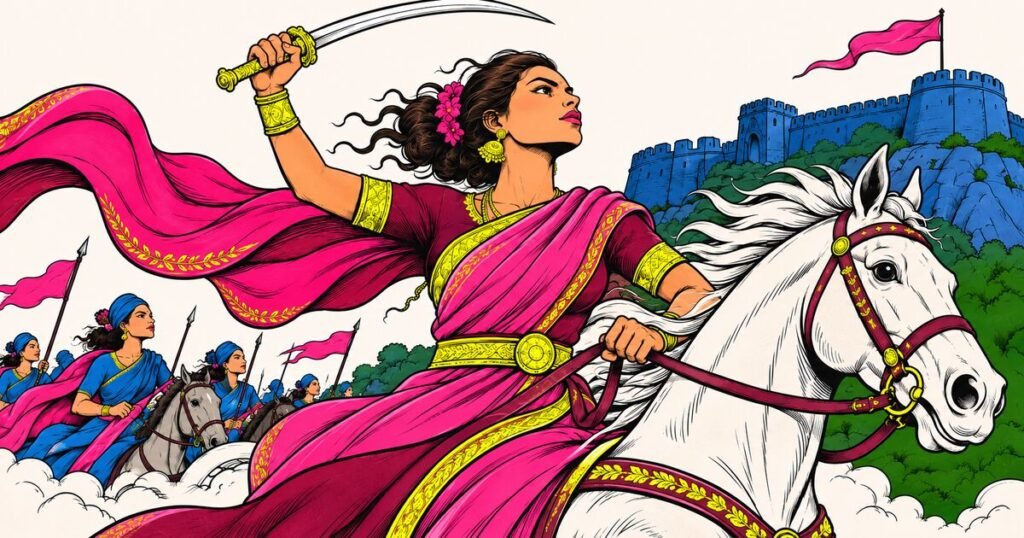
Rani Lakshmibai: what the Rani of Jhansi teaches a 2026 girl
Widowed, refused her kingdom, then led her own troops in 1857. Her story, and what we take from it.
 Herstory
Unladylike Dictionary: 10 words they used against women
Virago, spinster, shrew and seven more. Where each word came from and why we are taking it back.
 Gossip Corner
Wedding season survival guide for the single cousin
Shaadi kab, weight comments and the rishta ambush. Comebacks, outfit hacks and an exit plan for every function.